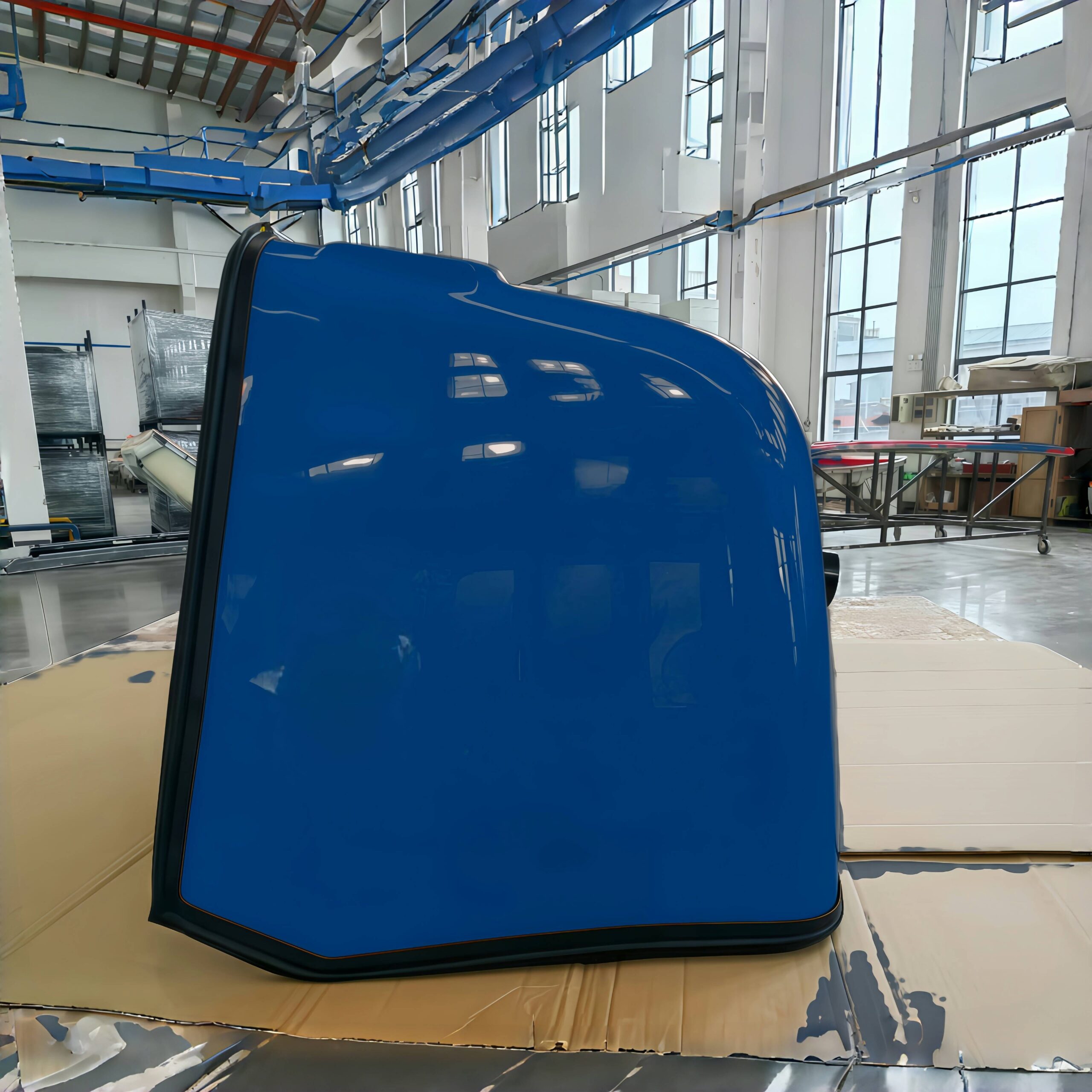
Introduction to the Hand Lay-Up Process
The Hand Lay-Up process is the simplest and oldest open-molding method for manufacturing fiber-reinforced plastic composites. It is a low-volume, labor-intensive process where resin and reinforcement materials (typically glass fiber) are manually placed into or onto a mold.
Because it requires minimal equipment, it is widely used for prototyping, large structures, and repair work. The quality and production speed are highly dependent on the skill of the operator.
Materials Used
· Resins: Polyester (most common), Vinyl Ester, or Epoxy.
· Reinforcements: E-Glass fiber (in the form of chopped strand mat, woven roving, or woven fabric), Carbon fiber, or Kevlar.
· Core Materials: For sandwich constructions, foam or balsa wood may be inserted between laminate layers.
Advantages
1. Low Tooling Cost: Molds can be made from inexpensive materials (wood, plaster, existing parts).
2. Large Part Capability: No size limitations imposed by machinery; you can build structures as large as a boat hull or wind turbine blade.
3. Design Flexibility: Complex shapes and inserts can be incorporated easily.
4. Portability: The process can be performed anywhere since it requires no heavy machinery or ovens.
5. Versatility: Different fiber orientations and material combinations can be used in the same part.
Common Applications
· Boat building (hulls and decks)
· Automotive components (truck cabs, spoilers)
· Swimming pools and tanks
· Large architectural moldings
· Prototyping and custom parts
· Wind turbine blades (often used for the initial layers or prototypes)